⌁
Understand surroundings
Explore computer vision to recognise relevant objects, obstacles and environmental features.
InteliVis is an AI-powered assistive mobility platform being developed to help people with visual impairments better understand the world around them.
Navigating unfamiliar or busy environments can present daily challenges for people with visual impairments. InteliVis aims to make useful environmental information more accessible through on-device artificial intelligence, computer vision and simple audio interaction.
Starting with a smartphone-based prototype, the platform is being designed to grow into smart cane and smart glasses solutions—making assistive technology more adaptable and accessible, particularly in underserved communities.
Explore computer vision to recognise relevant objects, obstacles and environmental features.
Receive concise audio descriptions and alerts designed to share relevant information without overwhelming the user.
A flexible platform intended to work across smartphones, smart canes and future smart glasses.
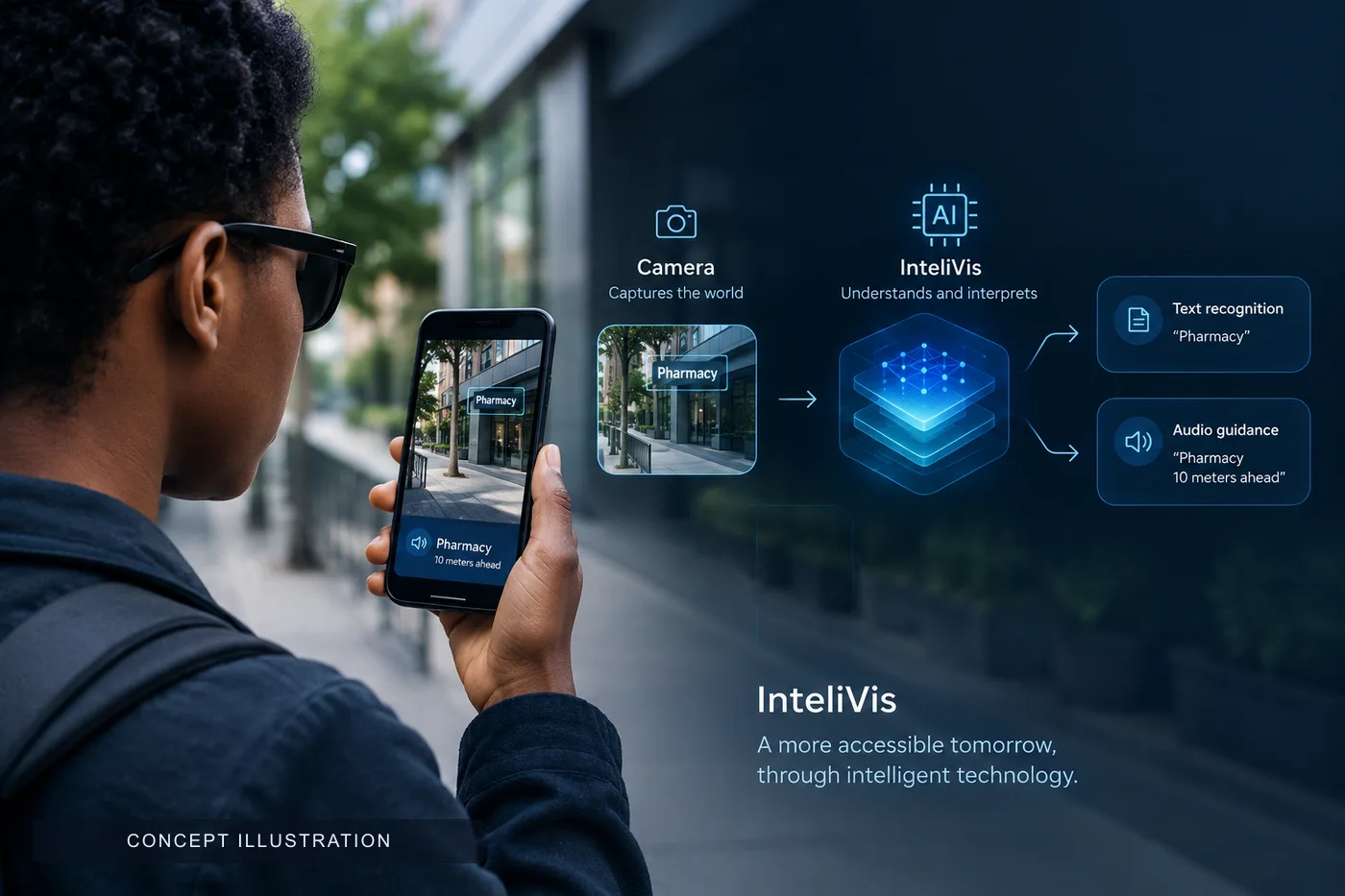
The concept brings sensing, AI interpretation and accessible interaction together in a simple flow.
A camera on a phone or future wearable captures the user's surroundings.
On-device AI analyses visual information and identifies potentially relevant objects.
Decision logic aims to prioritise relevant changes and potential hazards rather than narrating everything.
Short voice alerts—and, where supported, haptic feedback—communicate information to the user.
InteliVis is being designed so that its intelligence can work with different hardware over time. This makes the platform adaptable as technology becomes more affordable and accessible.
InteliVis aims to contribute to a world where people with visual impairments can access practical, affordable assistive technology that supports everyday mobility and participation. The project places accessibility, affordability, privacy and real-world user feedback at the centre of its development.
We welcome conversations with people with visual impairments, accessibility specialists, researchers, technology partners and organisations interested in inclusive innovation.
Discuss a partnership